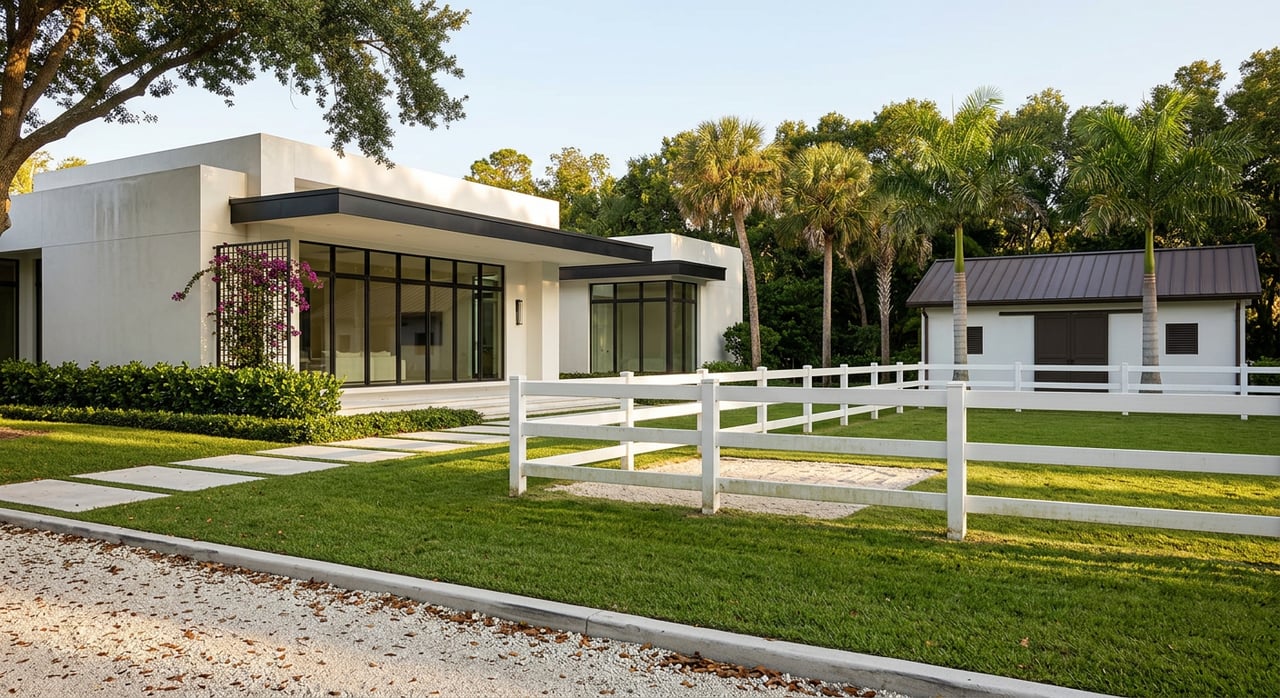
If you crave room to breathe, ride, and spread out while staying close to Broward’s job centers, Southwest Ranches deserves a look. You get acreage, a rural feel, and equestrian options that are rare in South Florida. In this guide you’ll see how lot sizes and zoning work, where you can ride, what to expect with wells and septic, and the tradeoffs compared to a typical subdivision. Let’s dive in.
Southwest Ranches at a glance
Southwest Ranches sits about 15 miles southwest of Fort Lauderdale and covers roughly 13 square miles with around 7,600 to 7,900 residents. The town was incorporated to preserve a rural lifestyle with large lots, equestrian properties, and open space. You will notice practical choices like limited sidewalks and a landscape shaped by agricultural and rural zoning. Learn more about the town’s roots and character on the official Southwest Ranches overview.
Acreage and zoning basics
Most of Southwest Ranches is governed by agricultural and rural districts defined in the town’s Unified Land Development Code. The code allows single-family homes, crop-raising, keeping or breeding animals, and certain commercial equestrian operations when they meet standards. If horses and barns are on your wishlist, this is why you see them throughout town. See how the ULDC addresses animal keeping and equestrian uses in Article 45 within the town’s public agenda materials.
Typical lot sizes range from about 1 acre to 2.5 net acres or more, depending on the district and the plat. In 2022 the town created a rural-residential category that requires 2.5 net acres for owner-initiated rezoning, which helps preserve open space. The community’s own summary notes “predominantly residential home sites with a minimum of one and two and one-half acres,” so you will find both ranchettes and larger parcels in the mix. You can confirm the town’s overall approach on the Southwest Ranches overview.
Net acres, easements, and lot shape
Do not assume one acre equals your buildable area. The town refined its “net acre” definition to exclude some powerline easements and surface water areas under certain conditions. There are also specific rules for flag lots and minimum linear dimensions that can affect what and where you can build. For example, flag lots in certain districts must meet 35,000 or 70,000 square feet of net acreage, and agricultural plots need at least one dimension of 250 feet. See the town’s planning discussion of net-acre and dimensional standards in this Comprehensive Plan Advisory Board document.
Equestrian life and open space
Riding is part of daily life here. The town’s Comprehensive Plan adopts a Greenways strategy with bikeways, pathways, and equestrian paths, and it looks to canals and utility easements to connect the network. That is why you will see bridle paths and multi-use trails threading through the community. You can review the policy and maps in the town’s Comprehensive Plan.
Public green spaces add to the trail system. Frontier Trails Conservation Area, Southwest Meadows Sanctuary, and Rolling Oaks Park are frequent trailheads for walkers, riders, and nature lovers. Frontier Trails itself is documented at roughly 93.2 acres in Florida Communities Trust records in the state’s FCT annual report. Private stables, training facilities, and boarding options also operate in town, which helps if you keep horses but prefer professional support.
Utilities and infrastructure reality
Here is one of the biggest differences compared to many Broward subdivisions: most Southwest Ranches properties use private wells and septic systems. Centralized water and sewer exist only in a few pockets. Town planning materials report that roughly 90 percent of households rely on on-site domestic water supply and private septic systems. Get a feel for the town’s infrastructure profile in this planning board agenda.
Because wells and septic are common, build a thorough inspection plan into your purchase timeline. Request current septic pump and maintenance records, order a septic inspection, and test well water. On-site sewage is governed by state rules, so factor potential repairs or upgrades into your budget. For context, see Florida’s onsite sewage statutes.
Drainage also matters. Some areas sit at lower elevations with seasonally high groundwater. The town has discussed sea-level rise and saturated soils as reasons to require larger lots in new subdivisions and to consolidate stormwater retention outside individual lots. This helps explain why you see larger parcels and community-level drainage plans. Review the town’s recent discussion in this agenda packet.
What it costs today
Inventory is limited, and values vary widely by lot size, location, and equestrian improvements. As a snapshot, a public home-value index placed Southwest Ranches’ typical home value around $1.4 million in early 2026, with many larger acreage estates trading well above that level. Treat that as a general reference, and use current, address-specific data to guide offers and pricing.
Tradeoffs vs typical subdivisions
If you are moving from a conventional Broward neighborhood, expect a different rhythm.
- Advantages: space and privacy, room for horses and outbuildings, access to multi-use trails and conservation areas, and a rural character within reach of Broward job centers. See the town’s summary of its rural mission on the Southwest Ranches overview.
- Common tradeoffs: private wells and septic instead of widespread central utilities, more property maintenance for fencing and pastures, permit checks for commercial equine uses, seasonally wet yards that require drainage planning, and travel-time variability depending on your exact address. The town’s planning materials highlight these practical differences in the infrastructure briefing.
Buyer due diligence checklist
Use this quick list to stay organized as you evaluate properties:
- Verify the parcel’s zoning and permitted uses in the ULDC. Start with the town’s code context and cross-check districts like A-1, A-2, RE, or RR on Zoneomics’ code page, then confirm with the Town.
- Confirm net acreage and buildable area after excluding easements and drainage areas. The town’s “net acre” definition matters. See the planning board’s net-acre discussion.
- Order a septic inspection, request pump and maintenance records, and test well water. Review Florida’s onsite sewage rules to understand standards.
- Ask about drainage district assessments, recent improvements, and potential future projects that affect your lot. The town’s budget and capital plan lists trailheads and drainage upgrades that may be relevant.
- If horses are a priority, confirm boarding, trainers, vets, and farriers nearby, and review barn or arena setbacks and plot coverage in the ULDC. See equestrian use references in the town’s public agenda materials.
- Check trail access and greenway links near the property if riding or cycling is important. The network strategy appears in the town’s Comprehensive Plan.
- Evaluate drainage and groundwater context for the specific parcel, especially if you plan new structures or pastures. Review the town’s discussion of stormwater and lot sizing in this agenda packet.
Finding your fit
If you want an equestrian-friendly home close to greater Fort Lauderdale, Southwest Ranches offers a rare blend of space and access. The key is aligning your wish list with the right zoning, lot size, and utility setup. A clear plan for inspections, drainage, and equine infrastructure will make your purchase smoother and protect long-term value.
You do not have to figure it out alone. From confirming zoning and net acreage to coordinating well and septic inspections, The Tello Team can guide you through each step and help you compare options across Southwest Broward. Ready to explore acreage and equestrian living or price your current property? Connect with The Tello Team for local guidance and get your free, instant home valuation.
FAQs
What is Southwest Ranches known for in Broward?
- It is a rural, equestrian-friendly town with large lots, open space, and a policy focus on preserving that character near Broward job centers; see the town’s overview.
How far is Southwest Ranches from Fort Lauderdale?
- The town sits about 15 miles southwest of Fort Lauderdale, offering a semi-rural setting with access to metro employment hubs per the town overview.
Can you keep horses on most Southwest Ranches lots?
- Generally yes, since animal keeping and commercial equestrian uses are addressed in the ULDC; specifics depend on the district and standards in Article 45 noted in the town’s agenda materials.
Are there public equestrian trails in Southwest Ranches?
- The town’s Comprehensive Plan maps a multi-use greenways network with equestrian paths and public conservation sites like Frontier Trails; see the Comprehensive Plan and the state’s FCT report.
Will my Southwest Ranches home have city water or sewer?
- Most properties rely on private wells and septic systems, with centralized service only in a few pockets; review the town’s infrastructure briefing.
What is a “net acre” and why does it matter?
- Net acre is a buildable-area measure that can exclude certain easements and surface-water areas, which affects lot splits and building plans; see the town’s net-acre discussion.
What should buyers inspect before closing in Southwest Ranches?
- Confirm zoning and net acreage, order septic and well inspections, review drainage context and capital plans, and verify barn or arena standards in the ULDC; start with the code context and town budget plan.