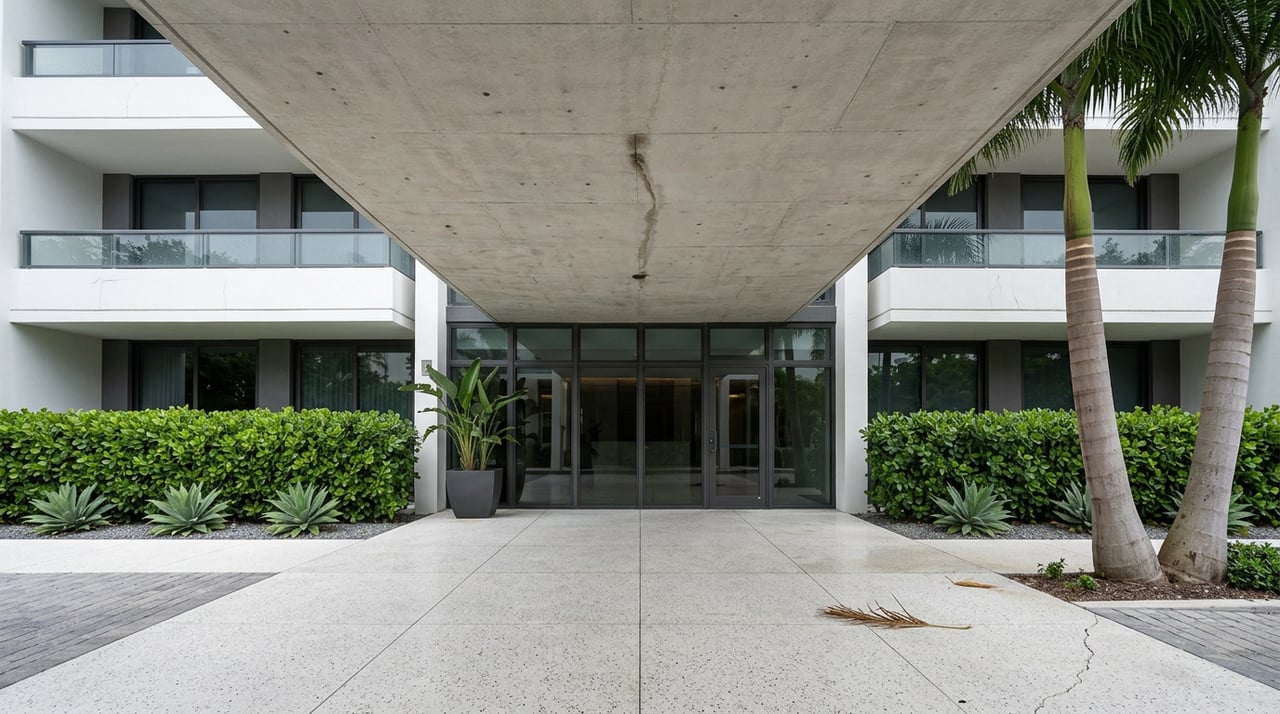
The two towers at 1060 Brickell opened around 2008. No hurricane damage history to speak of, no crumbling balconies, nothing that would make a buyer think twice. In November 2024, the association hit owners with a $21 million special assessment anyway. Individual bills range from $30,000 to more than $110,000 per unit, according to NBC6's reporting on the dispute. The money is going toward facade repairs on Tower 2, a full roof replacement, and pool deck restoration.
One resident put it plainly to CBS News Miami:
"I think it's excessive. I feel like I'm being milked."
That fight is almost two years old now, and the buildings are pushing 18 years old today, but it's the clearest illustration of a mechanism that's still working its way through Brickell in 2026. That reaction makes sense if you bought expecting a young building to behave like a young building. It doesn't anymore, and that's the part Brickell's current market data doesn't show you.
The median price is telling you the wrong story
Walk through Brickell's numbers from the first quarter of 2026, the most recent detailed read on the neighborhood, and it looks like a straightforward buyer's win. The median condo sale price sat near $660,000 based on late 2025 closings. Price per square foot in the resale market had softened by roughly 13 percent year over year. Inventory had stacked up to about 17 months of supply, nearly three times the six-month mark that usually defines a balanced market, and listings were averaging around 113 days before going under contract.
Read only that paragraph and you'd assume every seller in Brickell is discounting for the same reason: too many units, not enough buyers. That's true at the surface. It's not the whole mechanism.
The softening isn't spread evenly across buildings. It's concentrated in towers carrying a specific kind of risk that has nothing to do with location, view, or finish level. That risk is whether the building's reserve account can absorb Florida's post-Surfside structural requirements without going back to owners for a lump sum.
What changed, and why it's landing now
Florida passed Senate Bill 4-D in 2022, refined it with SB 154 in 2023, and tightened it again with House Bill 913 in 2025. Together, these laws did two things that used to be optional for condo boards. First, they mandated milestone structural inspections for any residential building three stories or taller once it hits 25 years of age within three miles of the coast, or 30 years inland, with a follow-up inspection every 10 years after that. Second, they created the Structural Integrity Reserve Study, a mandatory accounting of what it will cost to maintain the roof, load-bearing walls, waterproofing, and other structural components, with associations no longer allowed to vote to underfund or skip that savings.
For decades, plenty of Brickell boards kept dues low by voting to waive full reserve funding. That option is gone. Existing owner-controlled associations had to complete their first Structural Integrity Reserve Study by the end of 2025, a deadline that has already passed, according to the state's Division of Condominiums. Many buildings that hit their 25 or 30 year mark in this cycle face a milestone inspection deadline of December 31, 2026, which is just under five months away from today. That timing explains why assessment announcements are still landing in 2026 on buildings that completed their study months ago and are only now working through what it actually costs to fund.
It also explains why age alone doesn't protect you. The Structural Integrity Reserve Study requirement is triggered by a building's height, not its age. A tower finished this year still needs a study on file. A tower finished around 2008, like 1060 Brickell, already faces both requirements at once, and it isn't even old by Brickell standards.
Neglect shows up before the assessment does
Not every underfunded building looks the same from the outside. In a January 2025 report from the Biscayne Times, a 20-year resident of Isola Condominium on Brickell Key described a $19 million assessment tied to years of deferred maintenance on the pool deck and garage, layered on top of three smaller assessments. The same resident said the building's party room had sat closed for five years, repurposed as storage, while a roofing contractor was using the association's conference room.
That detail matters more than it might seem. A closed amenity space or a business center stripped of equipment isn't a headline the way a $19 million bill is, but it's often the earlier signal. Boards that defer maintenance on visible things tend to have deferred it on the structural things too, and the reserve study eventually catches up to both.
The paperwork that actually prices the risk
Florida law already requires sellers to hand over the documents that answer this question, and it requires them before you're locked into a contract. Here's what each one tells you and who has to provide it.
| Document | What it reveals | Who provides it |
|---|---|---|
| Structural Integrity Reserve Study (SIRS) | Whether major structural components are funded for future repair, or whether the association has one at all | Seller, at seller's expense, per Florida Statute 718.503 |
| Milestone Inspection Report summary | Whether the building has passed its age-triggered structural safety check, if one applies | Seller, if the building is subject to the requirement |
| Association budget and reserve disclosure | Whether a special assessment has already been approved or is under discussion | Seller or association, and for buildings with 25 or more units, posted online under 2026 transparency rules |
The contract language itself gives you leverage. Under Florida Statute 718.503, any contract signed after December 31, 2024 for a unit in a building that has completed a milestone inspection, turnover inspection, or Structural Integrity Reserve Study must include an acknowledgment that you received those documents more than 15 days before signing, or it must give you the right to extend closing up to 15 days after you receive them. If the seller can't produce them, the contract is voidable at your option before closing.
Ask for these three documents in your first conversation with the listing agent, not after you're under contract. As the Florida Realtors association's own disclosure form makes clear, sellers are also required to state whether any special assessments have already been approved as a result of the reserve study, not just whether one exists.
What this means if you're comparing two units right now
The practical move is to stop treating price per square foot as the number that settles a comparison. Two units listed at the same $/sqft in different Brickell buildings can carry entirely different five-year costs once you factor in what's coming due. Before you write an offer, request:
- The building's most recent Structural Integrity Reserve Study, or a written statement that one hasn't been completed
- The milestone inspection report summary, if the building is old enough to require one
- A written disclosure of any special assessments already approved, pending, or anticipated, with per-unit amounts if available
If a seller or listing agent can't produce these within a few business days, treat that delay as information. As Munizzi Law's breakdown of the disclosure rules notes, agents should be pushing sellers to gather these documents early precisely because delays can stall or unravel a closing timeline.
Quick answers for Brickell buyers
Does a lower HOA fee mean I found a good deal? Not on its own. Brickell dues generally run from about $0.80 to $2.50 per square foot per month depending on the building's age and amenities as of 2026. A building at the low end of that range with a thin reserve study is often cheaper today and more expensive later, once the assessment arrives.
Do buildings under 25 years old ever face this exposure? Yes. The Structural Integrity Reserve Study requirement applies based on a building's height, not its age, so even a tower completed this year needs one on file. Milestone inspections are the age-triggered piece, and 1060 Brickell shows that a building not yet 20 years old can still generate a nine-figure repair bill once the study comes back.
Where do I check a building's status before I even call an agent? Miami-Dade Property Appraiser records show the year a building was completed. For any association with 25 or more units, a 2026 transparency law requires governing documents, budgets, and reserve studies to be posted online or through an app, so ask for that link before you schedule a showing.
Brickell's price softening is real, and for a patient buyer it's an opening. The number that decides whether it's a good one isn't on the listing sheet. It's in the reserve study, and it's worth reading before you fall in love with the view.
If you're weighing two Brickell buildings against each other, or trying to figure out what a pending assessment means for a unit you already own, The Tello Team can walk through the building-specific numbers with you in plain language. Get your free, instant home valuation and let's talk about what you're actually buying.